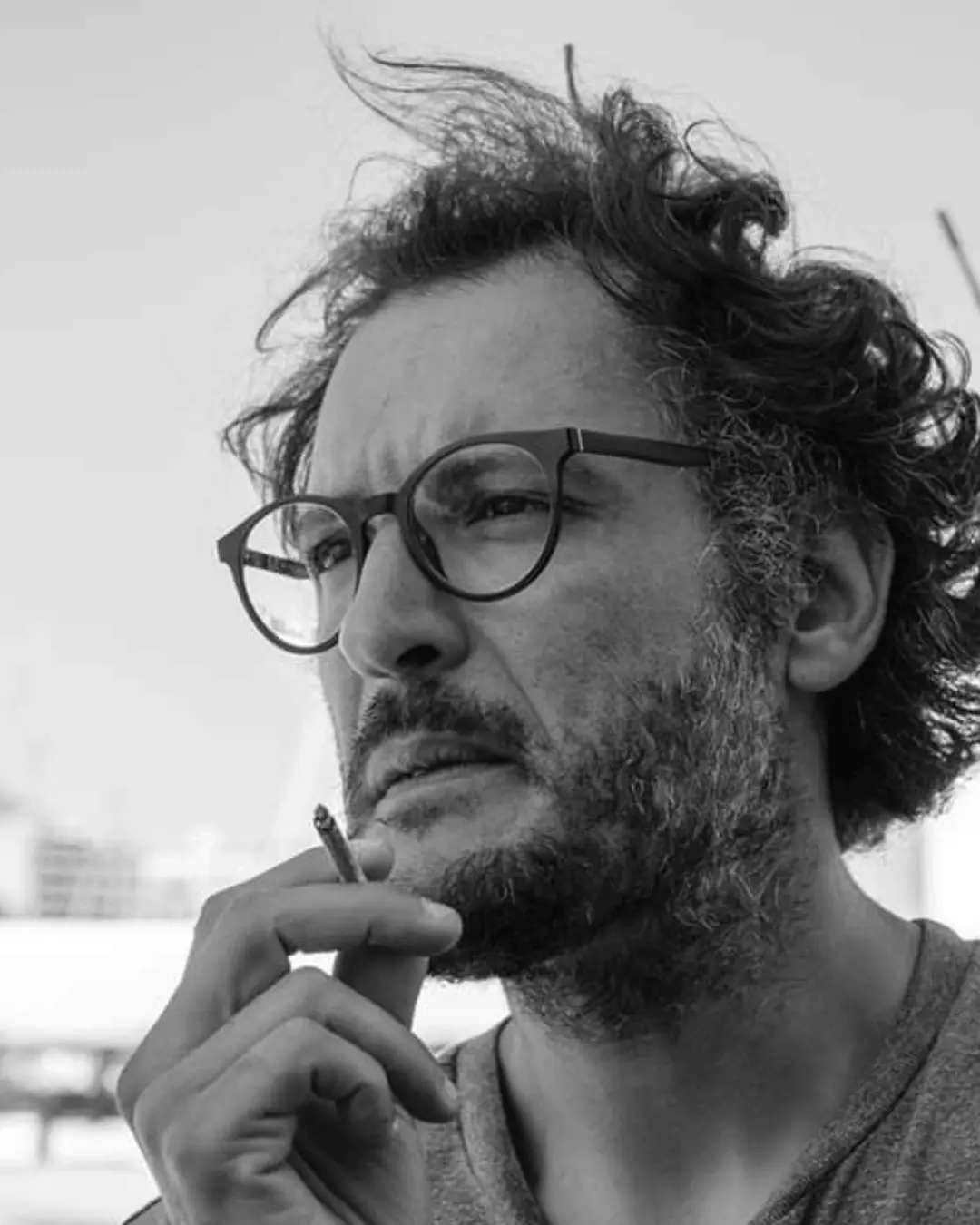
Francesco Faraci
Francesco Faraci was born in Palermo in 1983. After humanistic studies (Anthropology, Sociology), in 2013 he found in photography his means of expression, training himself through the images of the great masters of the French and American schools (William Klein, Henri Cartier-Bresson, Robert Doisneau, Robert Capa) in an attempt to renew a language that might otherwise sound outdated. He works in documentary photography and social reportage. At the heart of his work is his homeland, Sicily, whose cultural crossroads and existential paradoxes—birth and death, joy and violence, the loneliness hidden within the folds of modernity—he loves to describe, with a particular focus on minorities and on children who are born, grow up and are often shaped in the disadvantaged and abandoned areas of the city, in the marginal outskirts. For these reasons he travels far and wide across his homeland and the Mediterranean countries, telling their stories through long-, medium- and short-term projects.
Several of his reportages have been published in national and international magazines (Il Venerdì di Repubblica, La Repubblica, Il Manifesto, Time Magazine, Globe and Mail, The Guardian, VICE, Rolling Stone), and he has taken part in conferences and seminars on the realities of the outskirts of his city. He is also a videomaker and writer of novels, short stories and essays revolving around his roots and his native land.
His solo exhibitions have been held in Italy and around the world.
He runs photography workshops and courses throughout Italy.
In 2016, Lens Culture included him in its list of the 100 most interesting young photographers in the world.
That same year he published his first photobook, Malacarne (Crowdbooks), a three-year reportage on the outskirts of Palermo seen through the eyes of the children who live there.
In 2017, Malacarne was awarded second prize for best photobook at both Px3 in Paris and MIFA in Moscow, and was exhibited in Arles during Les Rencontres and in Barcelona during Photobook Phenomenon at the CCCB.
In 2018 he was a finalist for the Premio Amilcare Ponchielli.
In 2019 he followed Lorenzo "Jovanotti" Cherubini across the seventeen stops of his Jova Beach Party. From this experience came Jova Beach Party - Cronache da una nuova era, published by Rizzoli.
In 2020 he published Atlante Umano Siciliano with Emuse Edizioni, a three-year photographic journey across Sicily. With this project he was a finalist for the Premio Marco Pesaresi. That same year he was selected for the Leica Oskar Barnack Award and for the documentary programme for young photographers organized by Magnum Photos.
That same year, a solo exhibition of his work was held in Tel Aviv in collaboration with the Istituto Italiano di Cultura.
During the lockdown period, he documented the effects of the Covid-19 pandemic in Palermo, publishing the reportage in national and international newspapers; this experience also led to an editorial contribution for Suite numero 5, published by Emuse.
In 2021 he collaborated with Achille Lauro on the single "Solo Noi", with his photographs projected during his performance at the Festival di Sanremo. He collaborated with Netflix on "Una semplice domanda", a docuseries by and with Alessandro Cattelan, for which he curated the photography, portraying figures such as Paolo Sorrentino, Roberto Baggio and Cattelan himself. One of his portraits was chosen as the cover of issue no. 1772, dated 4 March 2022, of Il Venerdì di Repubblica.
In 2022 he traveled to Poland to document the condition of Ukrainian refugees, particularly of Roma ethnicity, along the border with Ukraine. The reportages were published in La Repubblica, Artribune and Torcha, the latter curated by Chiara Piotto, a journalist for Sky TG24.
He directed the music video "Mediterraneo", a single by Lorenzo "Jovanotti" Cherubini, shot entirely in the alleys and outlying neighborhoods of Palermo. In May 2022 he published the essay Anima Nomade: da Pasolini a una fotografia povera with Mimesis Edizioni, with a foreword by Franco Arminio.
Francesco Faraci on Ulilearn
No content published yet
We're working on the next materials.